
ITERATIVE FREEDOM / CHRISTIAN GINES
As a beacon for enslaved people making their way to freedom by the night sky and a symbol that later anchored Frederick Douglass’s The North Star, Polaris embodies a lineage of black liberation and meaning-making. Carrie Mae Weems draws on this legacy in her photographic series The North Star, consisting of seven oval images depicting the star set against a dark night sky. The ovals begin small, gradually increasing in size from left to right, with the central image the largest before tapering toward the end. For Weems, this project also serves as a link to her Southern roots, despite having been born in Portland, Oregon, and now living in and working in Syracuse, New York.
When arranged horizontally along a museum wall, this ensemble of images spans the length of the gallery and recalls a visual strategy that Weems used in earlier projects, such as Down Here Below, in which oval forms were aligned vertically. In The North Star, the images are framed by a convex lens that heightens the work’s speculative quality. Encountered in person, the piece draws the viewer in, as if looking through a telescope or standing inside a planetarium, with its deep black background and frame evoking the vastness of the night sky. The lens’s reflective surface intensifies this effect, functioning as a protective screen and as a black mirror in which viewers see themselves reflected. At the center of each image, the North Star remains fixed and luminous.

Seven oval photographs chart a cosmology across the wall, each framing the fixed point of the North Star in the night sky.
Guided in part by the North Star, her grandfather Frank Weems undertook his 1936 journey from the Earle area of Crittenden County, Arkansas, to Chicago after being brutally beaten for organizing a sharecroppers’ labor strike against abysmal wages and exploitative conditions in the cotton fields. At the time, rumors circulated that Weems had been flogged to death by vigilantes, a claim local authorities used to dismiss union organizing as propaganda, even as violence against labor advocates intensified. In reality, Weems survived by hiding for weeks, then fleeing Arkansas under the threat of death, eventually resurfacing in Chicago after months in secrecy. Although Carrie Mae Weems never met her grandfather, his story reaches her across time as an inherited history, one she must imagine, reconstruct, and render through the visual language of the work. His movement northward was not only an act of physical endurance, but also a response to the terror used to suppress black labor and mobility in the Jim Crow South. Weems renders this journey in her photographs as a distant horizon, transforming her grandfather’s resolute flight from racial and economic violence into an abstract but profoundly human meditation on freedom.1
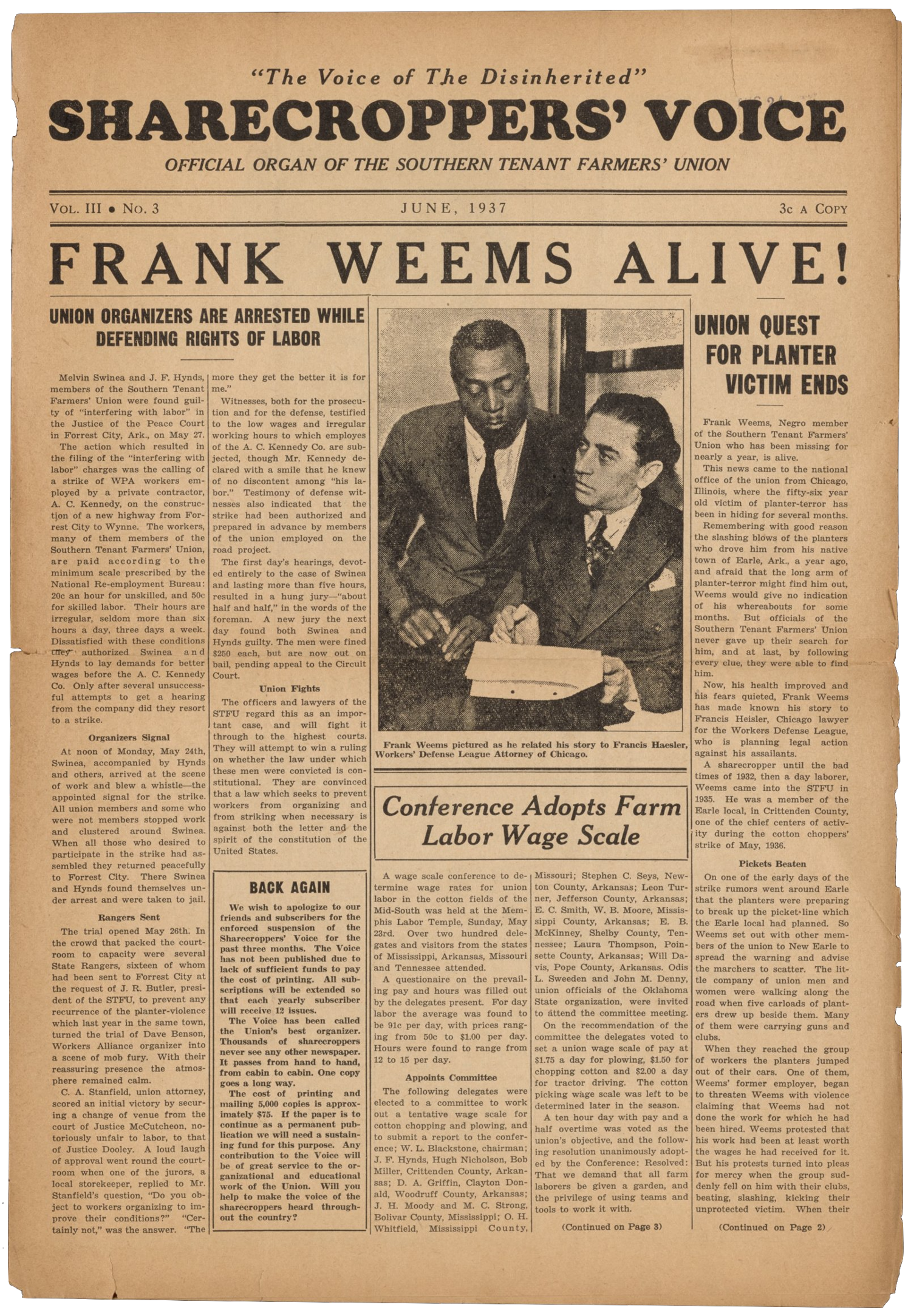
The newspaper’s headline—"Frank Weems Alive!"—announces the survival of Carrie Mae Weems’s grandfather after he fled Arkansas following violent reprisals for organizing sharecroppers.
In this post-emancipation and Jim Crow era, black mobility and freedom continued to be constrained by intense anti-black violence across the southern United States. Slavery did not disappear so much as reconfigure itself through sharecropping, a rearticulation of the same plantocratic logic that kept black people tied to the plantation, no longer as “slaves” but as laborers. What Carrie Mae Weems’s work, including her grandfather’s story, makes visible is how black people nonetheless refashioned and retooled the resources available to them, whether material or immaterial, to navigate pathways to freedom. The repetition of images in The North Star situates black freedom-making as an iterative practice rather than a singular event. Freedom is never fully secured, whether in the aftermath of emancipation, during the Civil Rights Movement, or in the present moment. It is sustained through continual struggle, enacted repeatedly as a constant undertaking.
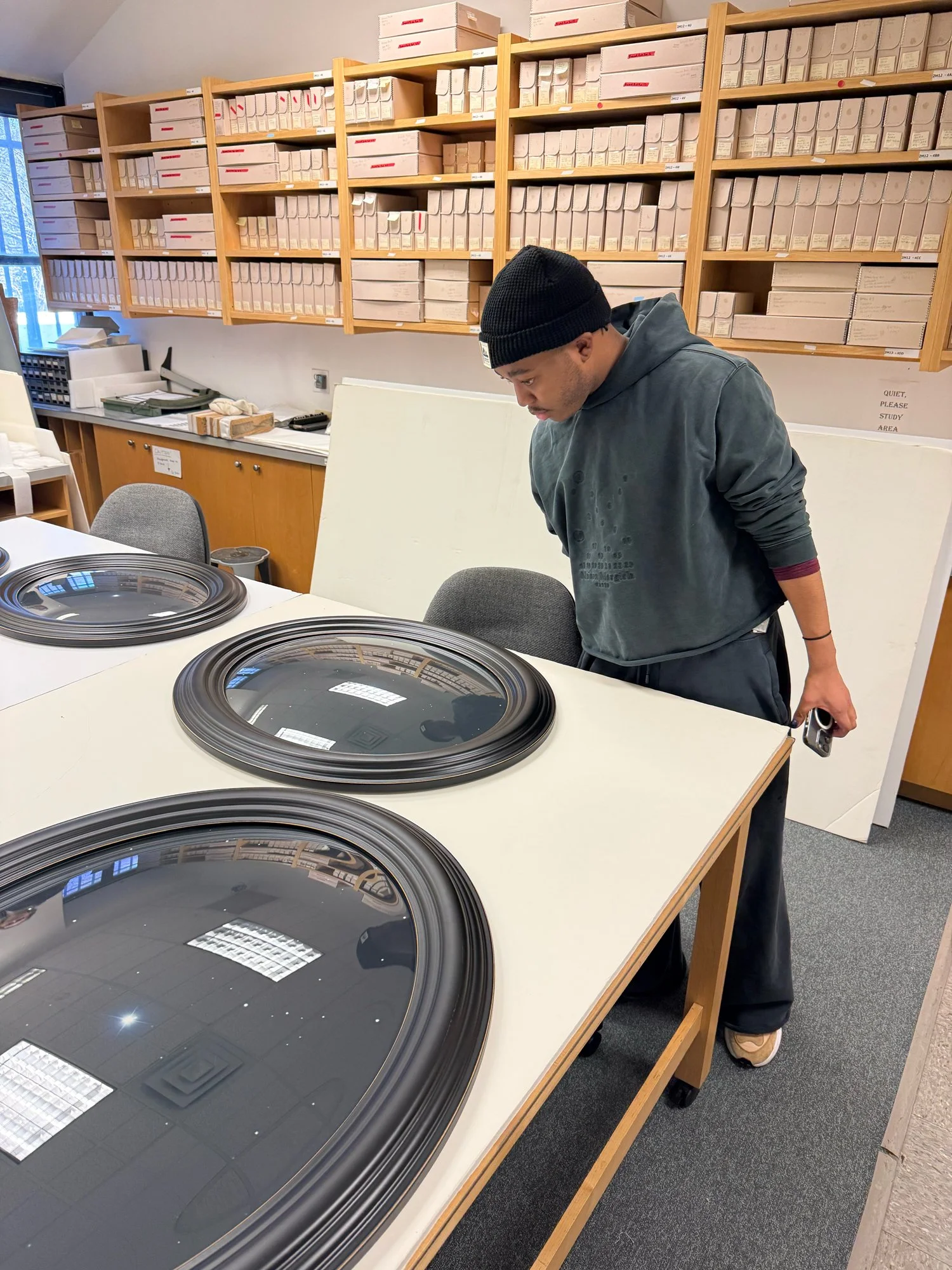
Jonathan and I visited the Brooklyn Museum to see Carrie Mae Weems’s The North Star in person.
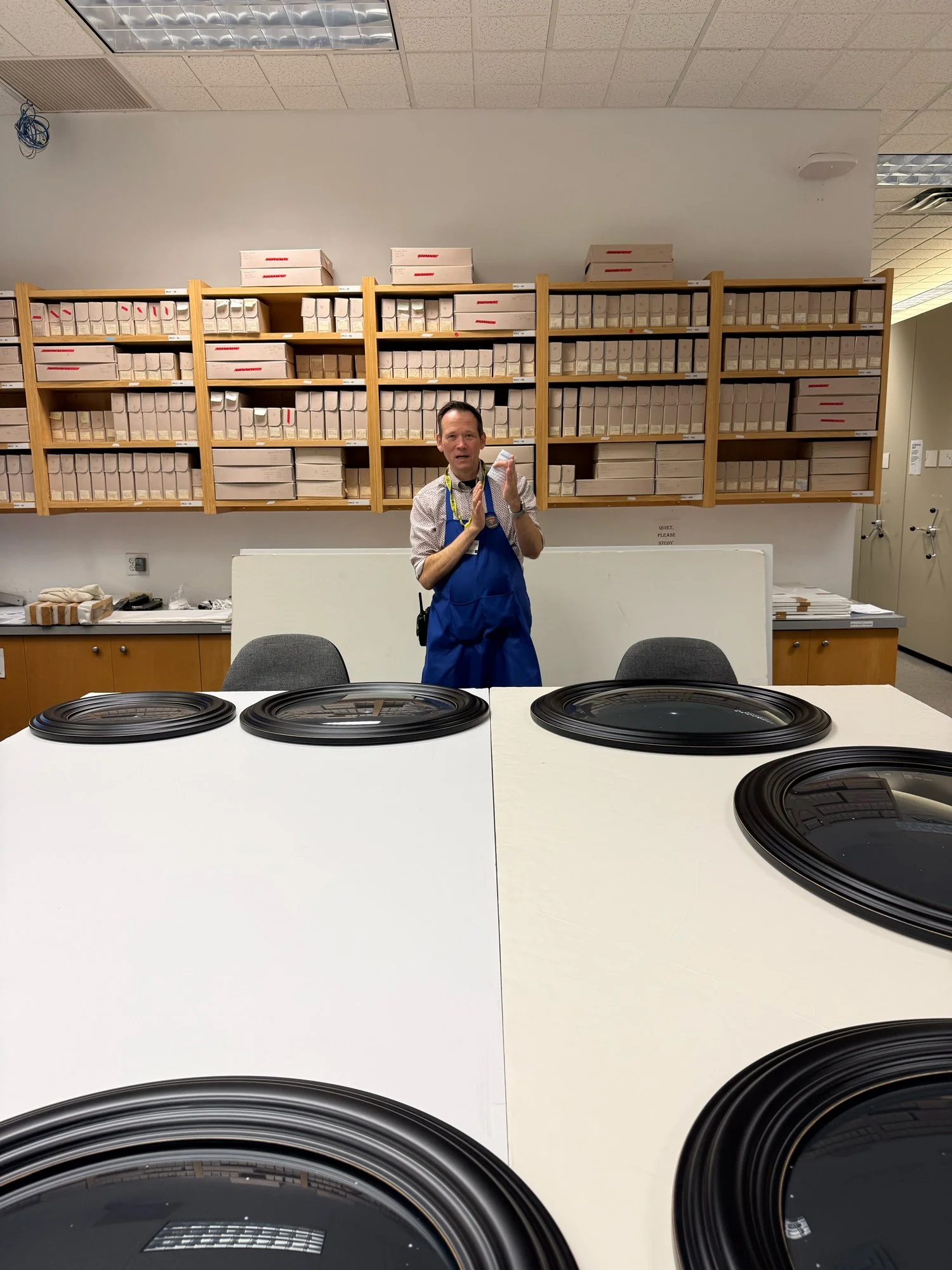
Walter Andersons, Collections Manager at Brooklyn Museum, was present at the viewing.
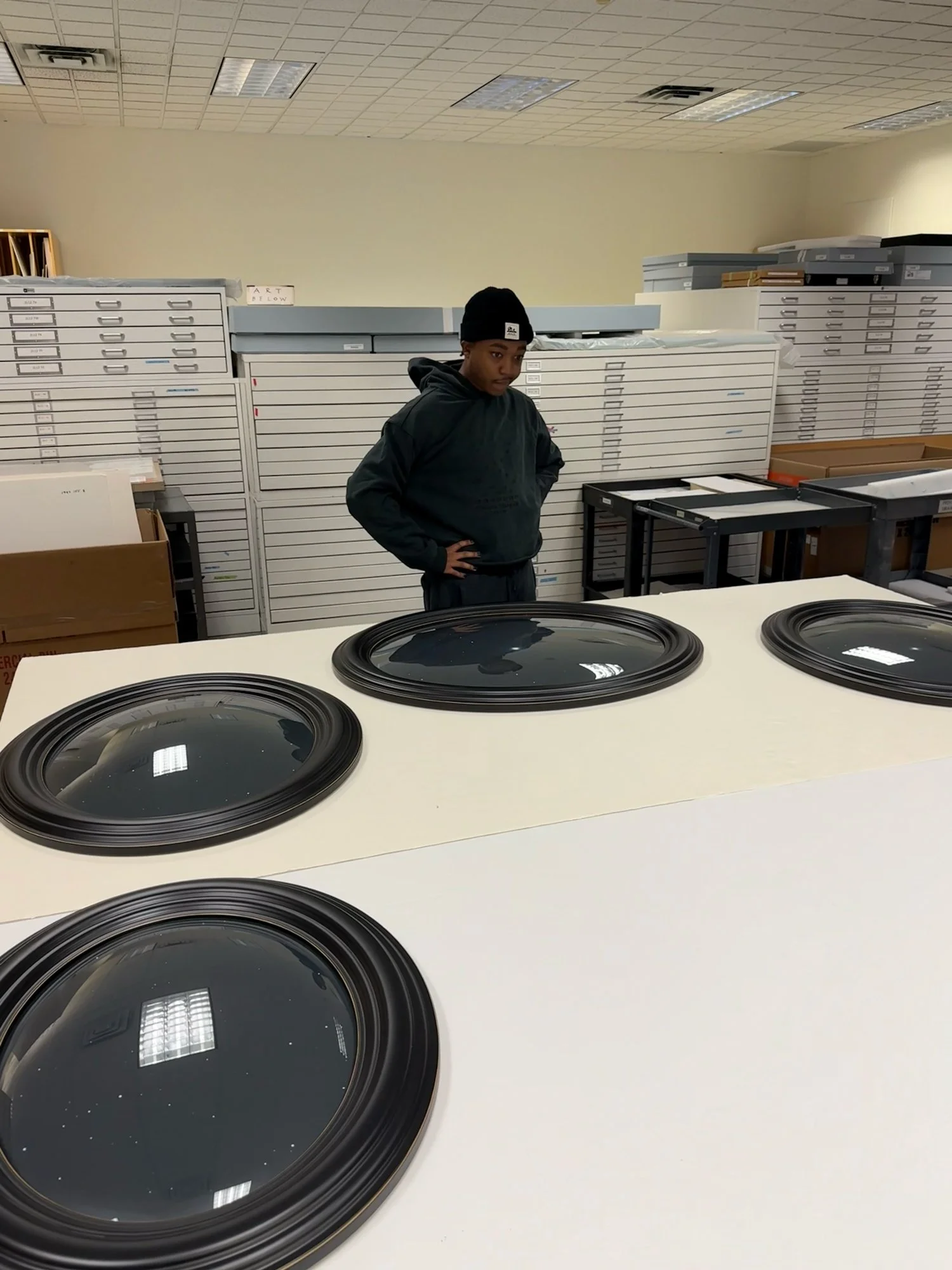
Some artworks can only be fully understood in the presence of the object itself.
Weems bridges the macro- and micropolitical, groundingThe North Starin her lineage while opening it outward as a shared point of reference. As a celestial body, the North Star is visible from countless locations and perspectives across the globe, appearing each night in the Northern Hemisphere’s skies. The reflective, mirror-like surface of the images deepens this sense of collectivity by inviting viewers to see themselves within the work. In doing so, the photographs do not simply depict a star, but position the viewer within a larger cosmology, where possibility is not a final state, but an open horizon shaped through continual struggle and evolution.
1. “Frank Weems Alive! Union Quest for Planter Victim Ends,” The Sharecroppers’ Voice, June 1937, 1-2;
“FARMERS: True Arkansas Hospitality, Time, June 22, 1936,
https://time.com/archive/6767650/farmers-true-arkansas-hospitality/.
