
THE SHIRT I COULDN’T WEAR / ARTI SANDHU
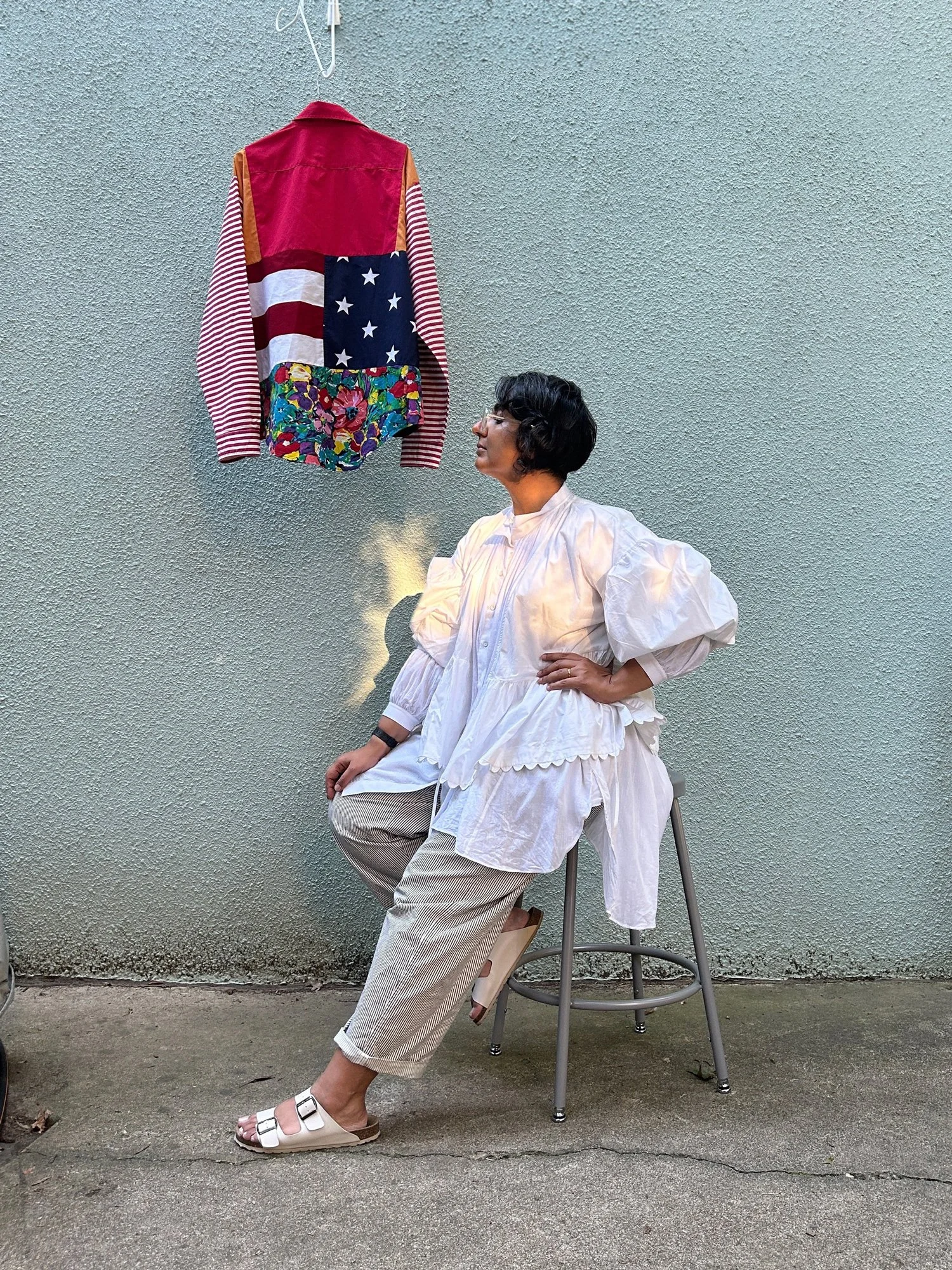
I could not wear the shirt, but I wanted to document it while it was in my possession.
What we wear and what we refuse to wear can carry ethical, political, and personal meaning. It is easy to assume that fashion influencers will wear whatever is sent to them free of charge in the name of promotion. Sometimes I am that influencer, though this may be less about my greed in wanting to own things and more a reflection of the brands that have sent me clothes. Still, influencers—especially small or “micro” influencers like me—occupy a space where what we wear circulates publicly as meaning. Our bodies become sites where aesthetics, identity, and accountability converge.
Influencers promote not only trends or brands through what we put on our bodies but also ideas about how clothing aligns with or reshapes identity. You could call this a responsibility, though I would also call it a constant negotiation—both private and public—between ethics and aesthetics, intention and interpretation. In this sense, refusal communicates as much as participation: what we choose not to wear, and what we choose not to say, can speak just as loudly.
I often comment that I have never encountered a piece of clothing I did not want to wear. Many items exist that I am not able to wear because of cost, access, size, or fit, but I have never refused a garment because I could not imagine it on my body. That is, until I received a parcel from Jonathan.
You likely know who Jonathan is and what North Star represents. For me, both signal an exciting convergence of fashion research and fashion practice—a space where design performs theory rather than merely illustrating it. So, when I was invited to wear one of Jonathan’s garments, I immediately said yes. As a fashion researcher and design professor, I was happy to participate in the project and to make that association visible on my grid.
Not knowing what had been selected for me was thrilling, if slightly unnerving. When the parcel arrived weeks later, it contained a carefully wrapped shirt. What struck me first was its brightness. Red, yellow, red and white stripes, green and black checks—all patched together from thrifted shirts and deadstock fabric—jumped out at me. The intensity of this combination was jarring at first. It was not anything like my usual style, but I felt I could make it work. Then I turned the shirt around…
The back was similarly patchworked, but instead of green and black checks, it featured a floral fabric and a partial United States flag: red and white stripes alongside white stars printed on a dark blue background. Seeing this, I stopped. I put the shirt down and realized I could not wear it, even though I could not yet fully articulate why.
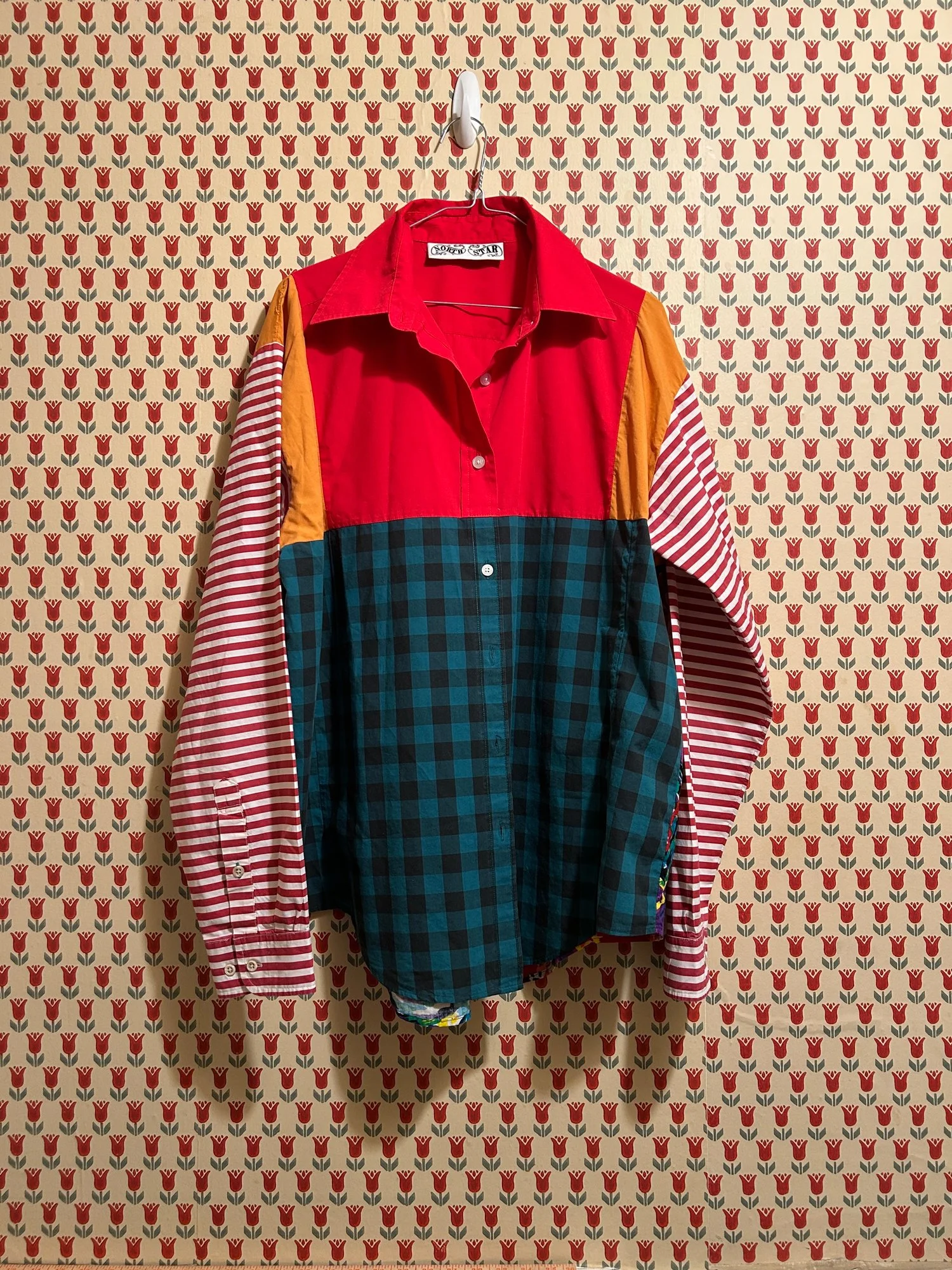
The shirt is composed of upcycled men's shirting.
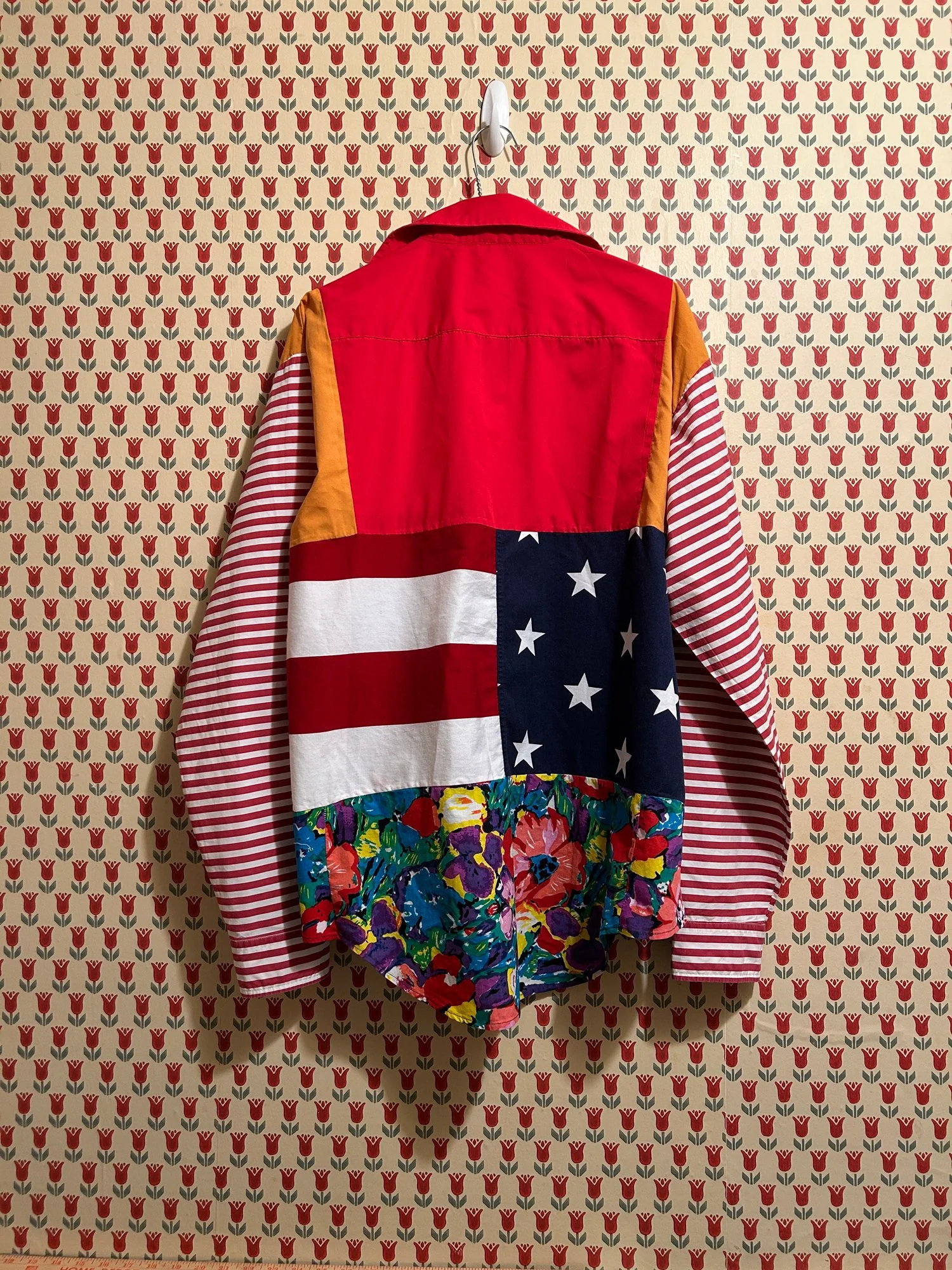
The American flag is on the back.
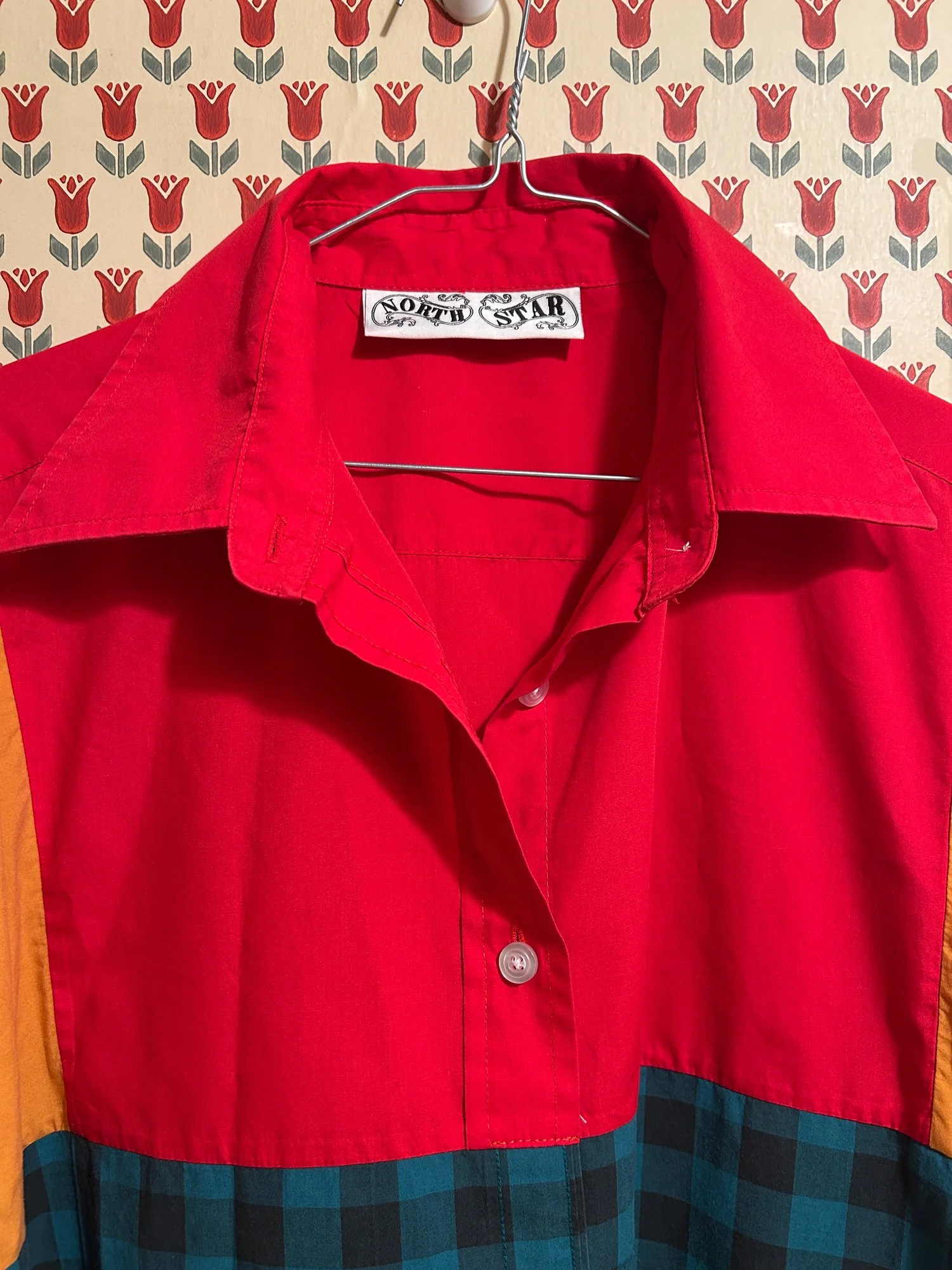
The tag is inspired by the masthead of Frederick Douglass’s North Star.
To explain this hesitation, I need to tell you a little more about myself. I moved to the United States almost two decades ago to teach fashion in Chicago. A lot has happened since making that move, and I have always credited this journey for enriching me professionally but also conceptually. Five years ago, I chose to become a citizen for practical as well as ideological reasons, and I have tried to play the role of citizen well, representing the country and institutions that have nurtured me with respect and grace, even though I still see my core identity firmly rooted in India (where I was born and raised).
I am grateful to both places, as well as critical of both. I understand belonging not as a settled condition but as something continually negotiated. Yet, when the shirt arrived last summer, I found myself unsure of my place within that negotiation. Not because of my own political beliefs, but because of how belonging itself has become increasingly conditional, shaped by immigration debates, racialized citizenship, and nationalist symbolism that draws sharp boundaries around who belongs and who does not.
I know that North Star’s garments seek to reclaim the U.S. flag as a form of activism. But for me, at that moment, the flag did not function as reclamation. I could not wear it with pride, nor could I wear it as resistance. The garment demanded a clarity of position I did not feel entitled—or able—to claim.
And here lies the rub. As a social media influencer, I did not want to share this ambivalence publicly. Even though I often disclose deeply personal aspects of my life online, I feared the repercussions of this confession. I did not want to appear ungrateful, nor did I want to publicly align myself with a national symbol at a moment when its meanings felt so fraught. Silence, in this case, felt like an ethical choice rather than a failure of honesty.
So, I sent the shirt back. This was not an act of rejection but of restraint—an acknowledgment that care sometimes requires refusal. Still, I felt it was important to document the garment’s presence in my life, which is why images accompany this piece. They capture a state of attentiveness, ambivalence if you will, with the artifact that was entrusted to me.
It has now been more than nine months since the shirt entered and exited my possession, and I remain unsure whether I will ever be able to wear it. Perhaps some garments ask questions that identity cannot immediately answer. And perhaps fashion’s power lies not only in what it allows us to express but also in the moments when it exposes the limits of expression itself.
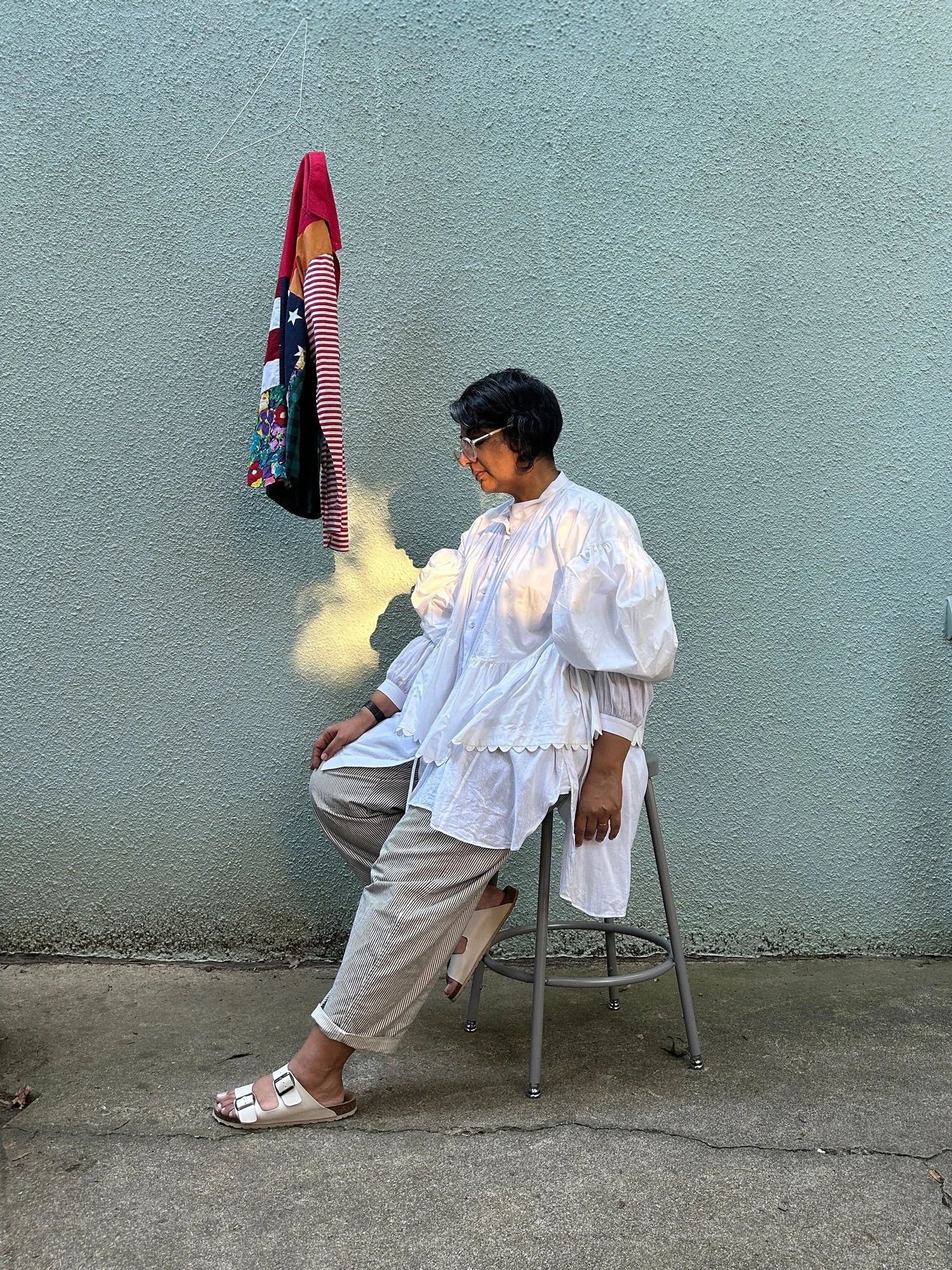
Some garments carry stories that deserve to be recorded, even if only for a moment.
