But the star was more than a navigational tool, it became a symbol of possibility. As the following examples show, it was embraced by the black intellectual and political class in the mid-nineteenth century as a metaphor for hope, clarity, and self-direction.
Frederick Douglass named his 1847 newspaper The North Star, cementing its status in African American political thought. In the paper’s first issue, he wrote, “To millions, now in our boasted land of liberty, it is the STAR OF HOPE.” His words positioned the star as a literal and spiritual guide for those seeking lives beyond the reach of enslavers.
Henry Bibb, in his 1849 Narrative of the Life and Adventures of Henry Bibb, an American Slave, recounted using the stars to flee enslavement: “I walked with bold courage, trusting in the arm of Omnipotence; guided by the unchangeable North Star by night…” For Bibb, the North Star was both compass and prayer, orienting his steps as he moved toward liberation.
William J. Wilson, writing under the pen name Ethiop, envisioned an imagined African American museum in his 1859 essay “Afric-American Picture Gallery.” In a pair of artworks titled The Underground Railroad, he paints a nighttime forest where the North Star gleams “small but bright and unfailing, and to the fugitive, unerring.” In Wilson’s hands, the star becomes art—its light illuminating the path of generations in search of deliverance.
William Still’s 1872 Underground Railroad contains similar references to the North Star, emphasizing its role as a symbol of vision and resolve for freedom seekers. As a prominent abolitionist and historian, Still documented the firsthand accounts of formerly enslaved people who navigated the perilous journey to North. In one account, he describes Alfred, an escapee from Virginia who, despite facing relentless rain and adverse weather, remained determined to reach free soil: “But the North Star, as it were, hid its face from him. For a week he was trying to reach free soil, the rain scarcely ceasing for an hour.” The star’s absence in this passage is as powerful as its presence—its light longed for, its guidance withheld, but never forgotten.
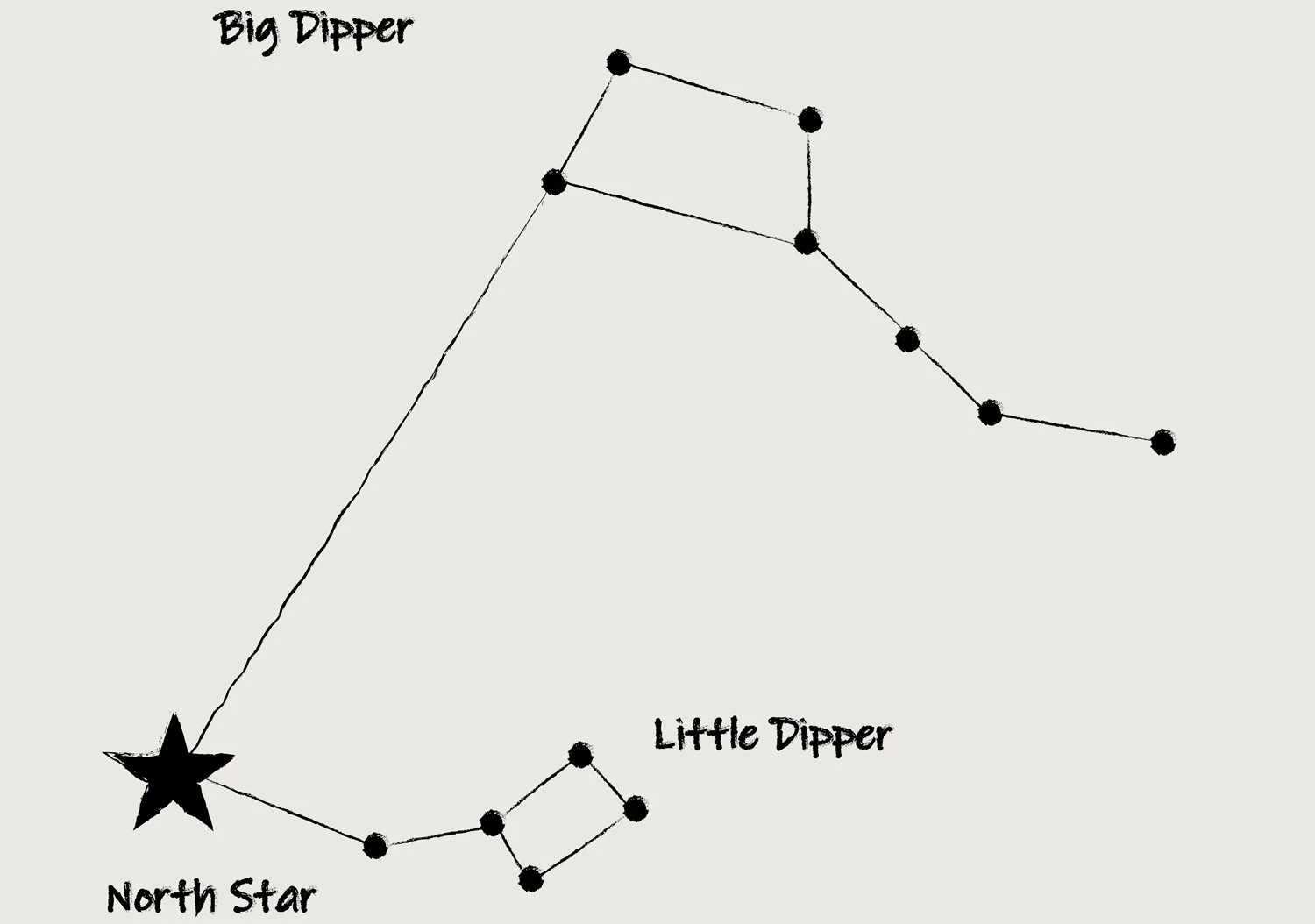
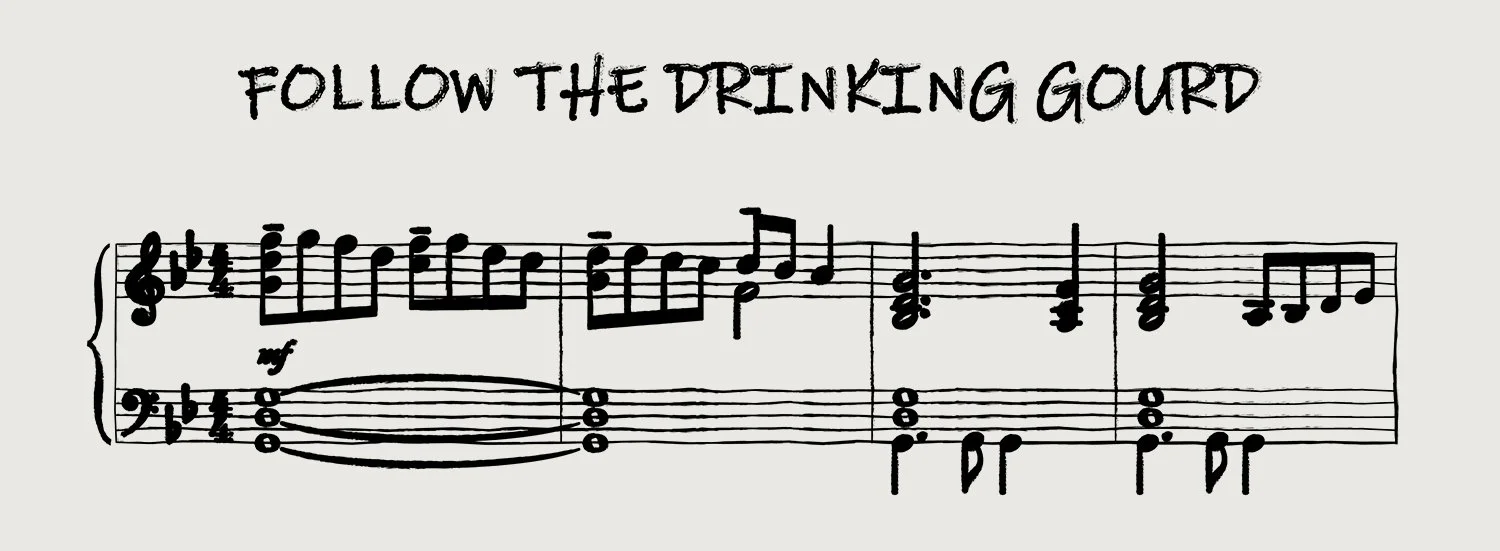
Even in postbellum memory, the North Star retained its meaning. Though written decades after slavery’s end, the folk song “Follow the Drinking Gourd” preserved the oral traditions of formerly enslaved people. In it, the Big Dipper’s handle—shaped like a gourd—leads to the North Star, which in turn leads to freedom. The song is both map and memory, sung across generations.